

Modules / Warehouse management

A real WMS, sized for a small warehouse.

Bins and zones, receiving with QC hold, putaway suggestions, pick waves along the pick path, scan-to-pick and packing slips. Built into the same system as your orders and books.

What your AI does here

Work that used to wait for you.

  1. 01
    Maps warehouses into zones, aisles and bins
  2. 02
    Receives purchase orders into a QC hold when needed
  3. 03
    Suggests where to put stock away
  4. 04
    Plans pick waves along the pick path
  5. 05
    Tracks pick, pack and ship with packing slips

Inbound

Receive, inspect, put away

Receive a purchase order in full or in part. Warehouses that require inspection land stock in a QC hold location, on hand but not sellable until it is released.

Padrino suggests the bin for each item, and moving stock between bins is one recorded movement, so the system always knows where every unit is.

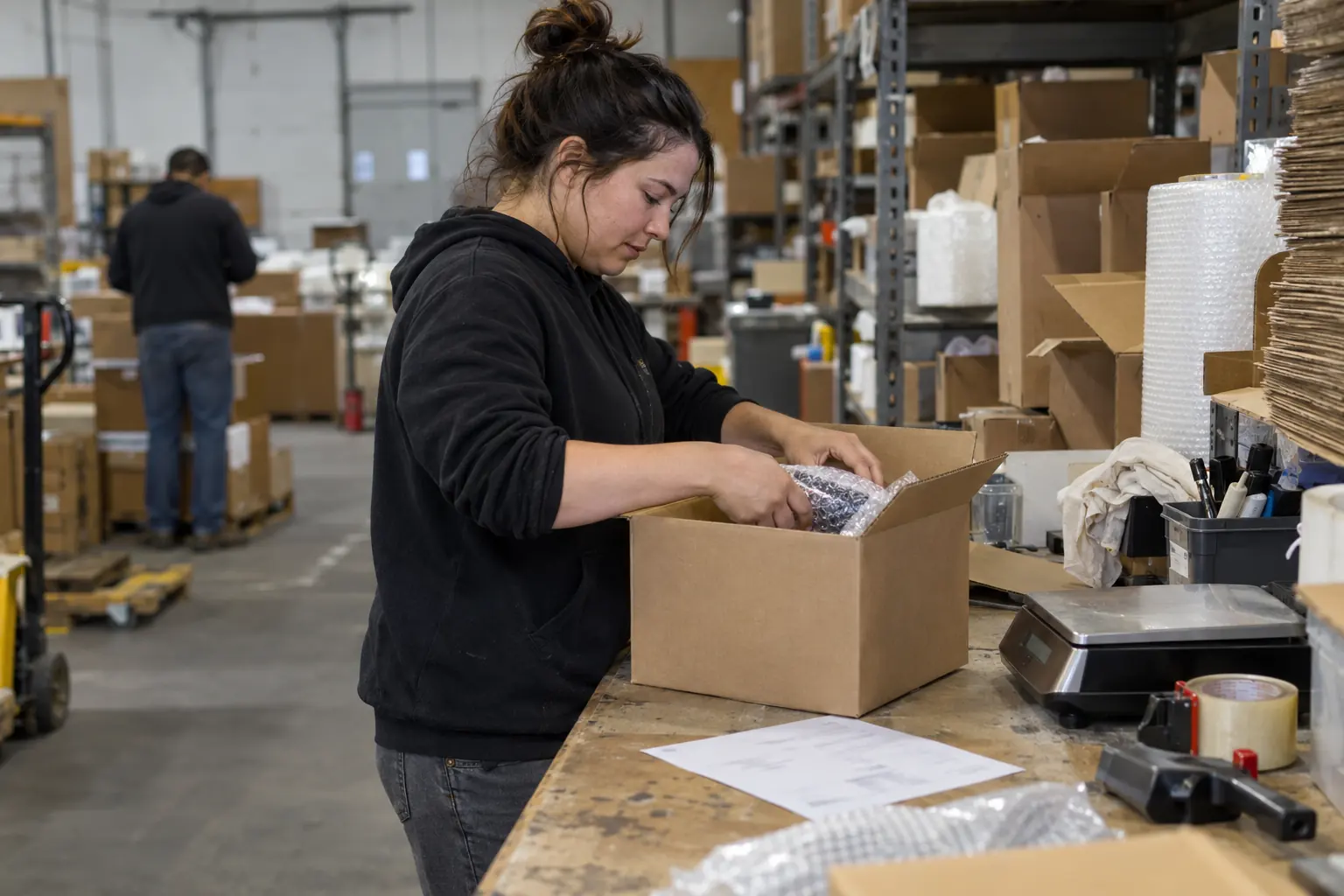
Outbound

Pick waves that follow the aisles

Open orders are grouped into a pick wave per warehouse, with lines ordered along your pick path so pickers walk the aisles once.

Scan to pick, pack with a printed packing slip, and mark shipped. Shipping moves the stock and hands the quantities to invoicing.

Gk Grok in Warehouse

Planned wave 14: 38 lines across 12 orders, sorted along the pick path. Packing slips are ready for the pack station.

Questions

What is the best WMS for a small business?

One that covers receiving, putaway, picking and counts without enterprise complexity, and that shares data with orders, purchasing and accounting so nothing is re-keyed.

What does a warehouse management system do?

It tracks where stock is inside the warehouse and runs the work: receiving, putaway, picking, packing, shipping and counting.

Do I need bins to start?

No. Stock can live at the warehouse level first, and you can add zones, aisles and bins when the warehouse grows.

Can pickers use their phones?

Yes. Picks and counts can be scanned, and pick lines arrive in pick-path order.

Give your AI a business to run.

Start with one connected system instead of assembling a stack of subscriptions first.